Knowledge Nuggets Miniseries 1 · Episode 2
Ergometers
What ergometers are and what they are used for in CPET.
3 min
Clicking loads content from YouTube · Privacy notice
Transcript
Transcript of the original English audio.
Welcome to our Knowledge Nugget. Today we'll shift our attention to ergometers and their functionality in the world of CPET. We will mainly describe what an ergometer is by definition, what the different types of ergometers on the market are, and their practical use in the field.
An ergometer is an external stress device and an exercise machine equipped with either a mechanical or an electromagnetic braking system, thus controlling and shifting the speed or resistance at any given moment. It is a diagnostic tool that is medically approved and complements ergospirometry in measuring work performance during an activity or a stress test.
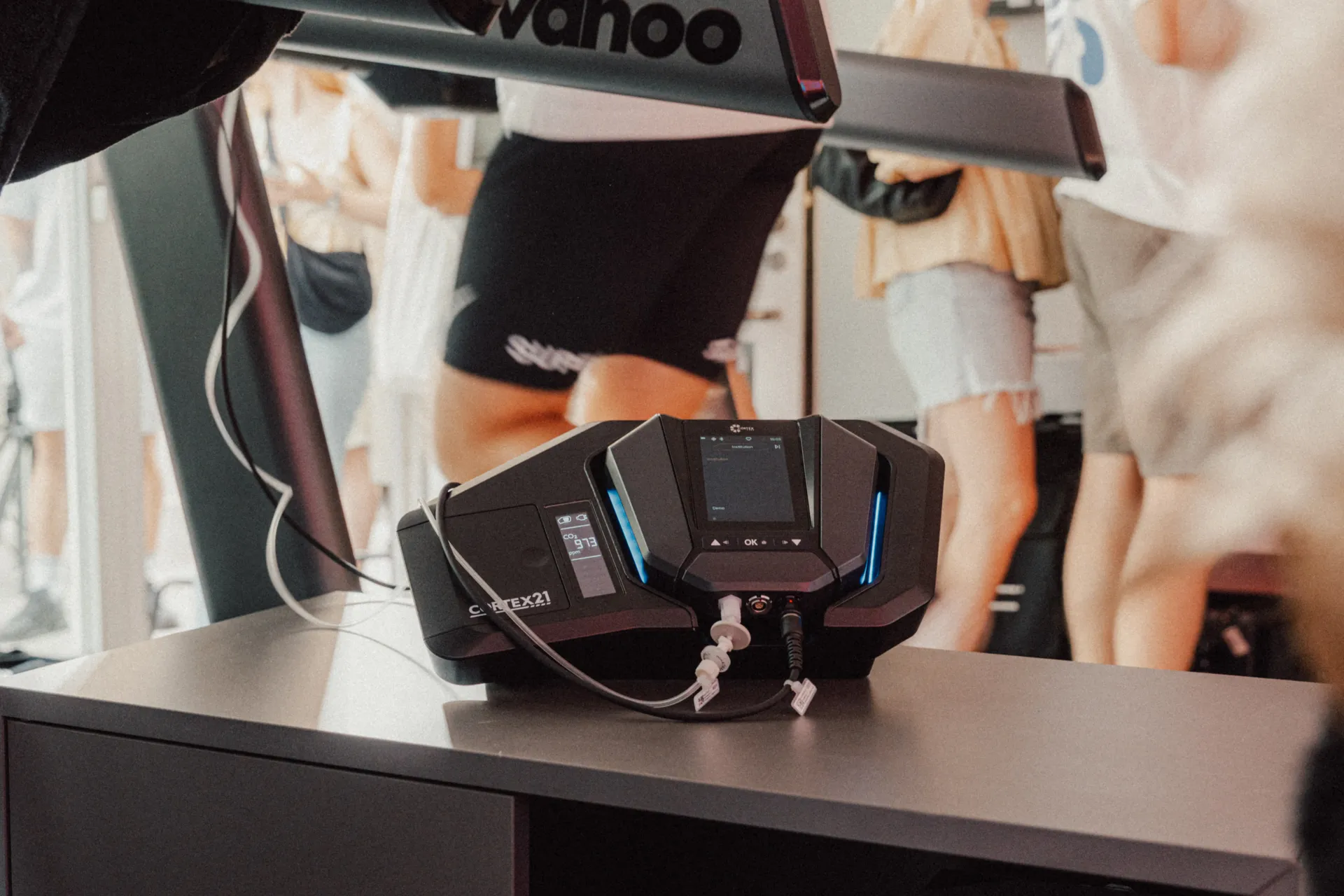
A variety of ergometers exist on the market. Those focused on lower-body motion include the bicycle ergometer and the recumbent. For the upper body, a standing or seated arm crank is used, depending on the needs and physical limitations of the subject. Once these ergometers are connected to the CORTEX software, control is also shifted over to the software, making it easier to conduct testing, especially in a complex, multitasking environment. Furthermore, full-body ergometers such as a treadmill and a rowing machine are used in combination with a CORTEX device to imitate the specific motion of a sport such as rowing, kayaking or cross-country skiing, and to keep track of the intensity of the work output.
The bicycle ergometer is considered a diagnostic device for measuring the physiological capacities of a patient in a clinical setting. Due to the small space it requires and its reliability, it is considered beneficial for everyday practice. Moreover, other functionalities such as blood pressure measurement are now also being integrated into the bikes. The stability of the bicycle ergometer during motion makes it favorable when using an ECG, as it ensures limited noise and artifacts on the signal.
Treadmills are also used in the same manner across multiple disciplines, as well as for improving health in different age groups. Both types of ergometers mentioned here are equally well suited for measuring maximum performance, with slightly higher values being estimated when using a treadmill.
To conclude, an ergometer is a diagnostic tool that helps us measure and evaluate the responses of the heart, lungs and muscles during a stress test. It can also be used for fitness purposes: weight loss, improving health and cardiovascular fitness, and stress release are a few of the many ways an individual could benefit from using an ergometer. Depending on the fitness goal, standardized exercise prescriptions can also be applied. Thank you for watching.
Additions in [square brackets] are editorial. CPET and spirometry support clinical judgment; they do not replace it.