Knowledge
Understanding CPET.
Publications, methodology explainers, software tutorials, webinars, and training courses. Curated from 35 years of CORTEX practice and the scientific community around it.
- Publications National and international publications featuring CORTEX systems. Filter by year and search by title or author.
- Knowledge Nuggets Compact video explainers on key concepts of CPET, from V̇O₂max to the ventilatory threshold.
- Webinars Product- and method-oriented introductions plus deep-dive topics. Live webinars and on-demand.
- Seminars In-person and hybrid formats with live tests in the lab. In cooperation with ZfS Münster.
- Trade Fairs & Congresses Where you can meet CORTEX in person. National and international trade fairs and congresses for medicine and sports.
- News News from Leipzig and the CORTEX world: product launches, research findings, events, partners.
What is CPET?
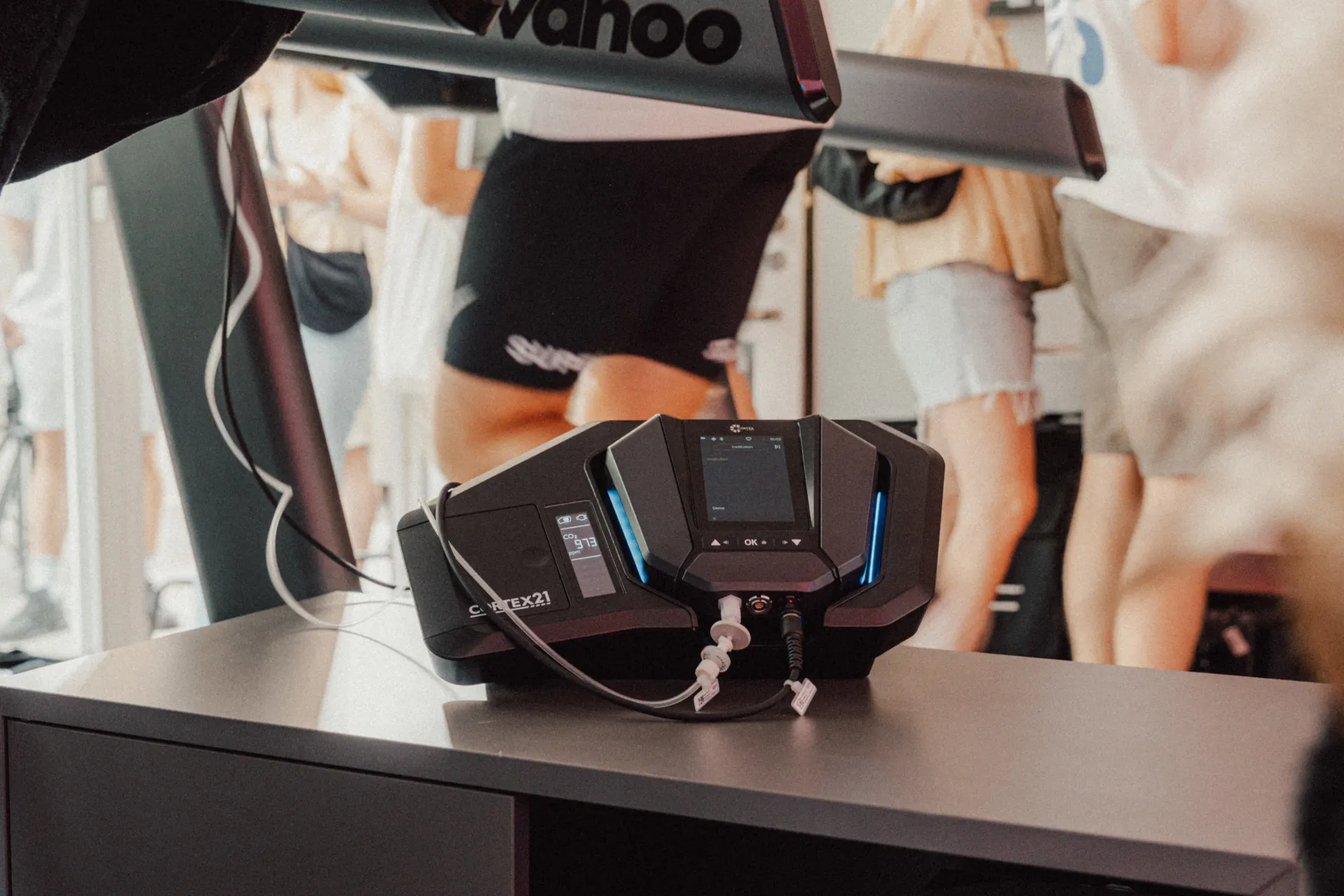
Cardiopulmonary exercise testing (CPET), also known as ergospirometry, is the simultaneous examination of how the heart, lungs, circulation, and metabolism respond to physical exercise. Breathing air flows through a flow sensor via a mask or mouthpiece; a coupled sample line continuously draws gas samples, which the system analyzes for their oxygen and carbon dioxide content.
The fundamental measured values are breathing volume and rate, oxygen uptake, carbon dioxide output, and heart rate. From these, the system calculates minute ventilation, the gas exchange rate, and the ventilatory equivalents for oxygen and carbon dioxide. They form the basis for differentiated statements about the performance of the individual organ systems.
The history of CPET
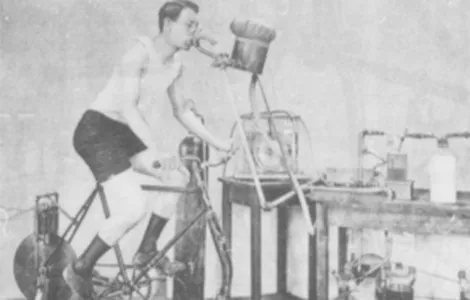
What happens in the body as exercise intensity rises has occupied researchers for more than two centuries. As early as 1789, Antoine Laurent de Lavoisier and Armand Séguin studied human gas metabolism during physical work. Decades later, the physicist Gustave-Adolphe Hirn used airtight chambers to analyze exhaled air for its carbon dioxide, oxygen, and nitrogen content.
In 1923, Archibald Vivian Hill formulated maximum oxygen uptake (V̇O₂max), to this day one of the most important spiroergometric metrics. This laid the foundation for modern cardiopulmonary exercise testing.