Skip to content

Medical

CPET in Cardiology

When findings at rest do not explain symptoms under exercise, CPET shifts the question from rest to exercise. It provides an objective measure of cardiocirculatory performance and supports you in confirming a suspected diagnosis.

Questions

  • 01

    Attribute the limitation

    The breath gas pattern during exercise distinguishes cardiocirculatory, ventilatory, pulmonary vascular and peripheral limitation. Training status can also be examined as a cause.

  • 02

    Quantify severity and prognosis

    Maximum oxygen uptake is an established marker of severity and prognosis. The measured value supports risk assessment and makes decisions about further treatment transparent.

  • 03

    Capture ventilation patterns

    Oscillating ventilation patterns during exercise are prognostically relevant and easy to miss in a single snapshot. The evaluation detects them automatically in the curve profile and marks them for reporting.

  • 04

    Monitoring therapy over time

    Repeated measurements with the same methodology show whether a treatment has changed performance. Trend views place the measurements directly side by side and make the development visible.

Parameters

Peak V̇O₂
Highest oxygen uptake measured during the exercise test, absolute or relative to body weight.
V̇E/V̇CO₂ slope
Slope of the relationship between minute ventilation and CO₂ output over the course of exercise.
V̇O₂/P slope (ΔV̇O₂/ΔWR)
Increase in oxygen uptake per watt of added power, determined over the course of a ramp or step protocol.
OUES
Oxygen Uptake Efficiency Slope: relationship between oxygen uptake and the logarithm of minute ventilation, which can also be determined from submaximal tests.
O2 pulse
Oxygen uptake per heartbeat, calculated from oxygen uptake and heart rate.
VT1
First ventilatory threshold: from this point, CO₂ output rises disproportionately to oxygen uptake.
PETCO2
End-tidal CO2 partial pressure, measured at the end of each breath.

Operation and integration

The measurement fits into your existing ECG infrastructure. The interface to custo med works bidirectionally with a synchronized cursor, and third-party ECGs from Schiller, GE, Micromed, AmedTec, Spacelabs Healthcare, Norav, Welch Allyn and others can be connected.

More than 40 ergometers and treadmills can be connected, and an HL7 interface is available as a software option for handing data over to hospital and practice systems.

The scope of measurement can be extended within the same test, for example with impedance cardiography, continuous blood pressure, SpO2 or a 12-lead ECG.

Gas calibration is due once a month, the reusable volume turbine once a day, and disposable turbines require no calibration at all.


Used by

Real Madrid Manchester United Borussia Dortmund ISS (ESA/NASA) Charité TU München Loughborough University div. Olympiastützpunkte Red Bull Adidas On Lanserhof Carl Zeiss AG Volkswagen BMW FC Köln Real Madrid Manchester United Borussia Dortmund ISS (ESA/NASA) Charité TU München Loughborough University div. Olympiastützpunkte Red Bull Adidas On Lanserhof Carl Zeiss AG Volkswagen BMW FC Köln Real Madrid Manchester United Borussia Dortmund ISS (ESA/NASA) Charité TU München Loughborough University div. Olympiastützpunkte Red Bull Adidas On Lanserhof Carl Zeiss AG Volkswagen BMW FC Köln

Studies from this area

The 5 latest publications from research and practice.

View all studies

Talk to our specialists.

The examination requires an indication established by a physician. For contraindications and usage information, please refer to the instructions for use.

The systems are intended for use by trained, qualified personnel.

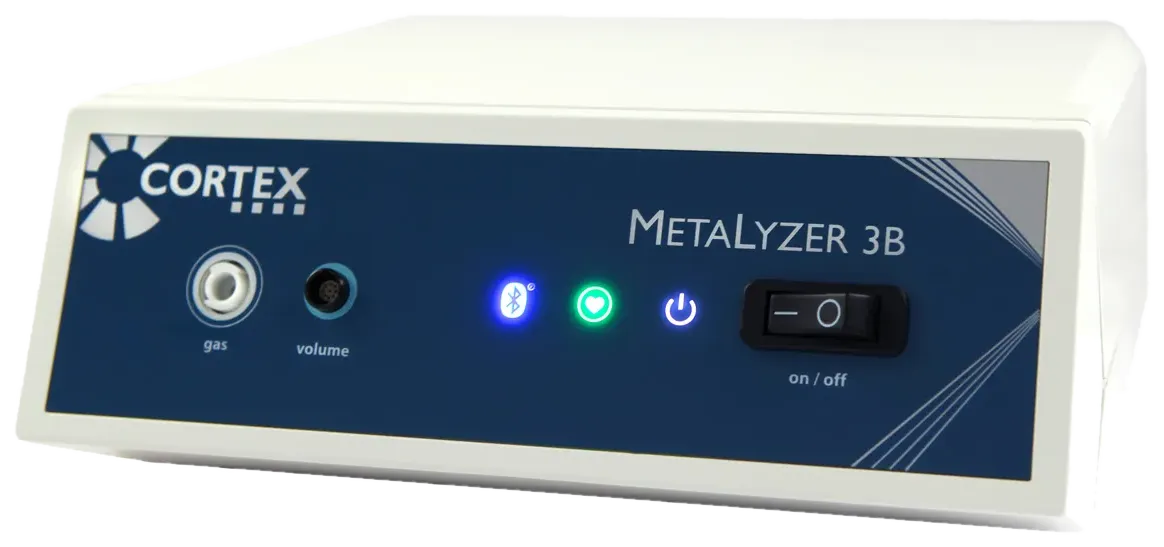
METALYZER® 3B, METAMAX® 3B and MetaSoft® Studio are medical devices.

Which system is right for you?