Knowledge Nuggets Miniseries 1 · Episode 1
CPET fundamentals
What CPET actually is and what practical benefits it offers.
3 min
Clicking loads content from YouTube · Privacy notice
Transcript
Transcript of the original English audio.
Dear listeners, CORTEX welcomes you to the first clip of our mini-series on cardiopulmonary exercise testing. Today we will get a better understanding of what cardiopulmonary exercise testing, or in short CPET, is, why we need it, what the procedure looks like and, of course, what the practical benefits of CPET are. So let's get started.
Quite often, cardiopulmonary exercise testing is also referred to as V̇O₂max, spiroergometry, metabolic testing or, as we have seen earlier, CPET. Terms such as respiration, diagnosis, therapy, health and more are also closely associated with CPET.
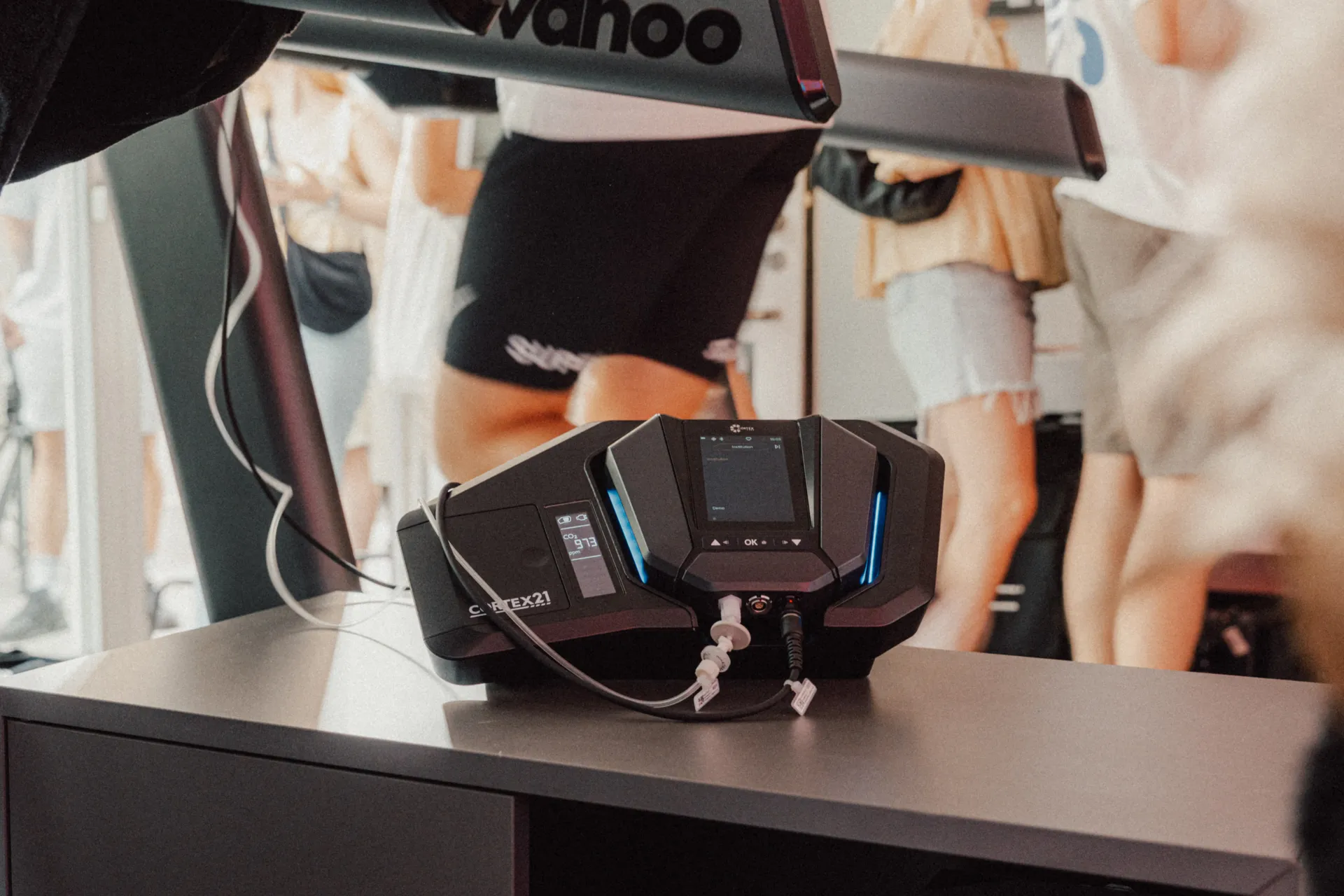
So what is CPET? Simply a non-invasive procedure to [help] estimate the overall physical health, fitness or sickness level of an individual. The process of spiroergometry consists of physical exertion on a bike, a treadmill or simply outdoors. Gas exchange in the human body is measured throughout the test on a breath-by-breath basis.
With this diagnostic procedure, respiration and the performance of the heart and circulation are all physiological parameters that are qualitatively measured. The findings of the measurements can [together with other clinical findings] guide the clinician not only towards a diagnosis, but can also assist in creating therapy programs for post-treatment. Moreover, scientists and performance professionals use this diagnostic tool to identify limitations and areas of potential improvement in the human body.
In more depth, spiroergometry helps us estimate the maximal aerobic performance and evaluate the energy metabolism, thus assisting in nutrition and training recommendations. Last but not least, its use [can] reach as far as preoperative assessment.
To summarize, spiroergometry, or in other words CPET, finds its practical applications among physicians, scientists and performance professionals. It is used to measure and evaluate the entire physiological system as well as to assess limiting factors and exercise tolerance. Thank you for joining.
Additions in [square brackets] are editorial. CPET and spirometry support clinical judgment; they do not replace it.