July 29, 2026
New studies with CORTEX systems: altitude training, running impact, testing under load
Research
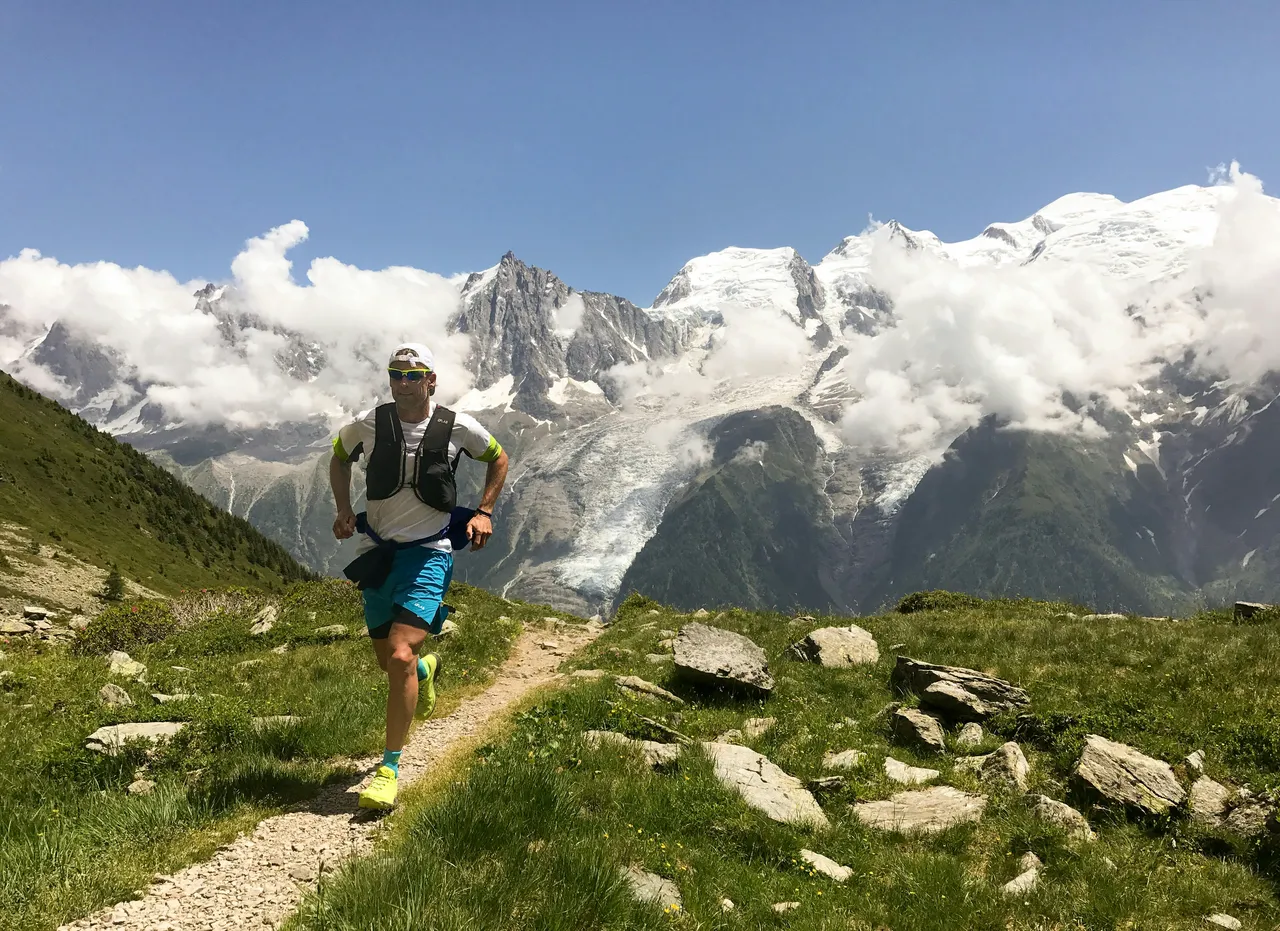
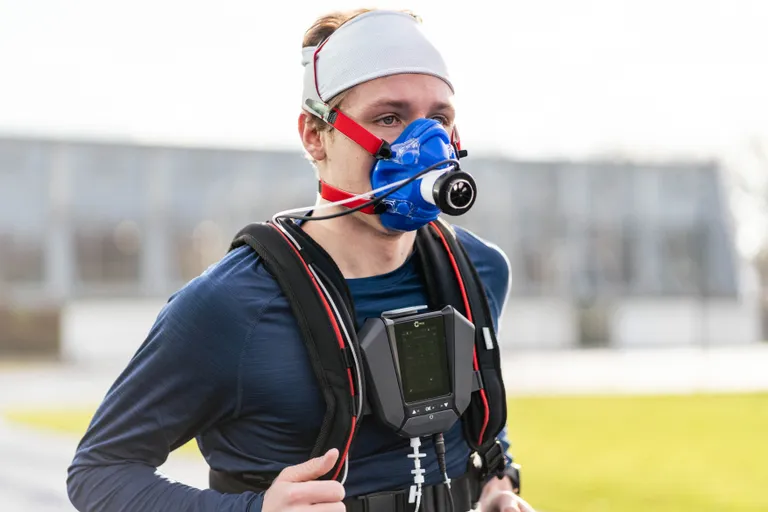
Three newly published studies took measurements with METAMAX® 3B and METALYZER® 3B, each outside the comfort of the lab: in an altitude house, on a mountain road, and on a treadmill with 12.6 kilograms on the back.
In the lab, CPET is routine. It gets interesting once the conditions are no longer ideal: thin air, uneven ground, a load on the back. That is exactly where three studies published in recent weeks went. They ask different questions but share one problem.
An altitude camp does not affect everyone equally
A three-week altitude camp ties up time, money, and recovery reserves. In half of the athletes studied, the measured V̇O₂max barely changed.
A team led by Simon Klügel followed 15 squad athletes of the Deutscher Leichtathletik-Verband (the German athletics federation) through a camp based on the live high, train low principle, with a ramp test on the METALYZER® 3B-R2 one week before and one week after the stay. On average, V̇O₂max rose by 2.1 ml·kg⁻¹·min⁻¹, a good three percent. That average hides two groups: plus 3.5 among the high responders, plus 0.6 among the low responders, down to minus 1.7 in individual cases. Three athletes could not complete the post-test due to injury or illness.
For the authors, the real finding is that the split correlated with the baseline blood count, not with training load, sex, or discipline. A monocyte share above ten percent was found in this sample almost exclusively among the high responders, a neutrophil share above 50 percent exclusively among the low responders. The three dropouts also fit this pattern.
The authors explicitly do not conclude that blood values could replace performance diagnostics. They propose bringing the two together. The reason lies in the design of the study itself: who counts as a responder is defined solely by the measured change in V̇O₂max. Without the ramp tests before and after the camp, there would be no outcome measure against which a blood value could prove itself as a predictor. In the individual case, the test after the camp remains the instance that shows whether the prediction held. The study is exploratory and the sample small; confirmation in larger cohorts is still pending. (Klügel et al., European Journal of Applied Physiology 126:2553–2562, 2026)
On the mountain, pace matters, not the surface
A team led by Olaf Ueberschär had ten trained runners and triathletes run on Tenerife at around 50, 1,000, and 2,300 meters, each on asphalt and on natural trail, at three individually determined paces.
The result dispels a common assumption. The surface made no statistically demonstrable difference, neither in step frequency nor in impact load at the tibia nor in lateral asymmetry. In this study, trail was no easier on the body than asphalt. Mechanical load was determined overwhelmingly by pace: plus 2.2 steps per minute and plus 0.9 g peak acceleration per additional km/h. The altitude effect was small, 1.1 steps fewer per 1,000 meters of elevation.
For training practice, in the authors' assessment, this means that mechanical load at an altitude camp is managed through pace, not through route choice. As a guideline for the adjustment, they suggest around three percent slower per 1,000 meters of elevation. At 4:15 min/km, that would be about 15 more seconds per kilometer at 2,000 meters.
The pace targets for all 180 field runs came from the individual ventilatory thresholds of a single CPET test on the METAMAX® 3B in the lab, evaluated independently by two people. According to the authors, a repeat threshold determination at each altitude level would have been desirable but was not practically feasible. (Ueberschär et al., Sensors 26(1):276, 2026)
A test protocol can match the task
Special forces on deployment run neither on level ground nor without gear. A standard protocol therefore leaves out exactly the conditions that define the job. Anyone designing their own protocol instead faces the question of how the results can still be put into context.
A team led by Alain Dössegger pursued this question. The protocol they developed keeps the pace constant at 8 km/h and instead increases the incline by one degree per minute, with a vest of 12.6 kilograms worn throughout. It was compared against the established speed protocol of Swiss Olympic. Twenty-three trained subjects, including active special forces members, completed both tests in random order.
V̇O₂max differed between the two protocols by 0.2 ml·kg⁻¹·min⁻¹ (95 percent confidence interval minus 1.3 to 0.9). At the second ventilatory threshold and for heart rates, the values stayed within the predefined tolerance range; the V̇O₂ at the first threshold fell just outside it. The vest and incline presumably alter breathing mechanics in the moderate range.
The authors therefore consider the protocol suitable for capturing the maximum oxygen uptake of operational personnel and of athletes who carry loads up inclines, for example in military endurance competitions or hike-and-fly races. It reflects the real demand while delivering values that can be related to results from the standard protocol. Here too, confirmation in larger and more homogeneous samples is still pending. (Dössegger et al., Military Medicine 191(5-6):e1086–e1094, 2026)
The shared problem
What connects the three studies is the standard situation that no longer exists. In Klügel's work, five weeks and an altitude camp lie between the two tests. In Ueberschär's, threshold values from one lab test go on to structure field runs at three altitude levels. In Dössegger's, a freely defined protocol stands against a national standard, measured with two different CORTEX systems and evaluated in MetaSoft® Studio. Each of the three questions required a protocol that could adapt to the condition.
You will find these and around 400 more studies in our publication database, filterable by year, system, and application area. If you are working on a question of your own, get in touch.